I Let My AI Do My Entire Apartment Hunt
The Big Picture
The gap between "I want to do X" and "X is done" is collapsing.
The gap between "I want to do X" and "X is done" is collapsing. Not for everything yet, but for research, outreach, tracking, and follow-up logistics, it's already close. The edge isn't replacing judgment. It's removing the 80% of work that's operational drag.
The Story
- I was planning a move and needed to find an apartment quickly.
- No car. Tight commute constraints. Limited time.
- So I handed the search to Akira, my AI assistant running on a Raspberry Pi.
Here is what happened.
The Problem With Apartment Hunting
Anyone who has done it knows: apartment hunting is a part-time job.
Hours on Zillow. The same email copy-pasted to many properties. Forgetting which ones you already contacted. Missing the follow-up window. Someone else gets the unit. It is repetitive, tedious, and stressful for something that should just be logistics.
I had a few constraints: no car, 15-minute walk or a 20-minute transit ride from work.
I did not want to apply that filter 200 times manually.
So I did not.
What Does my Conversation with Akira Look like
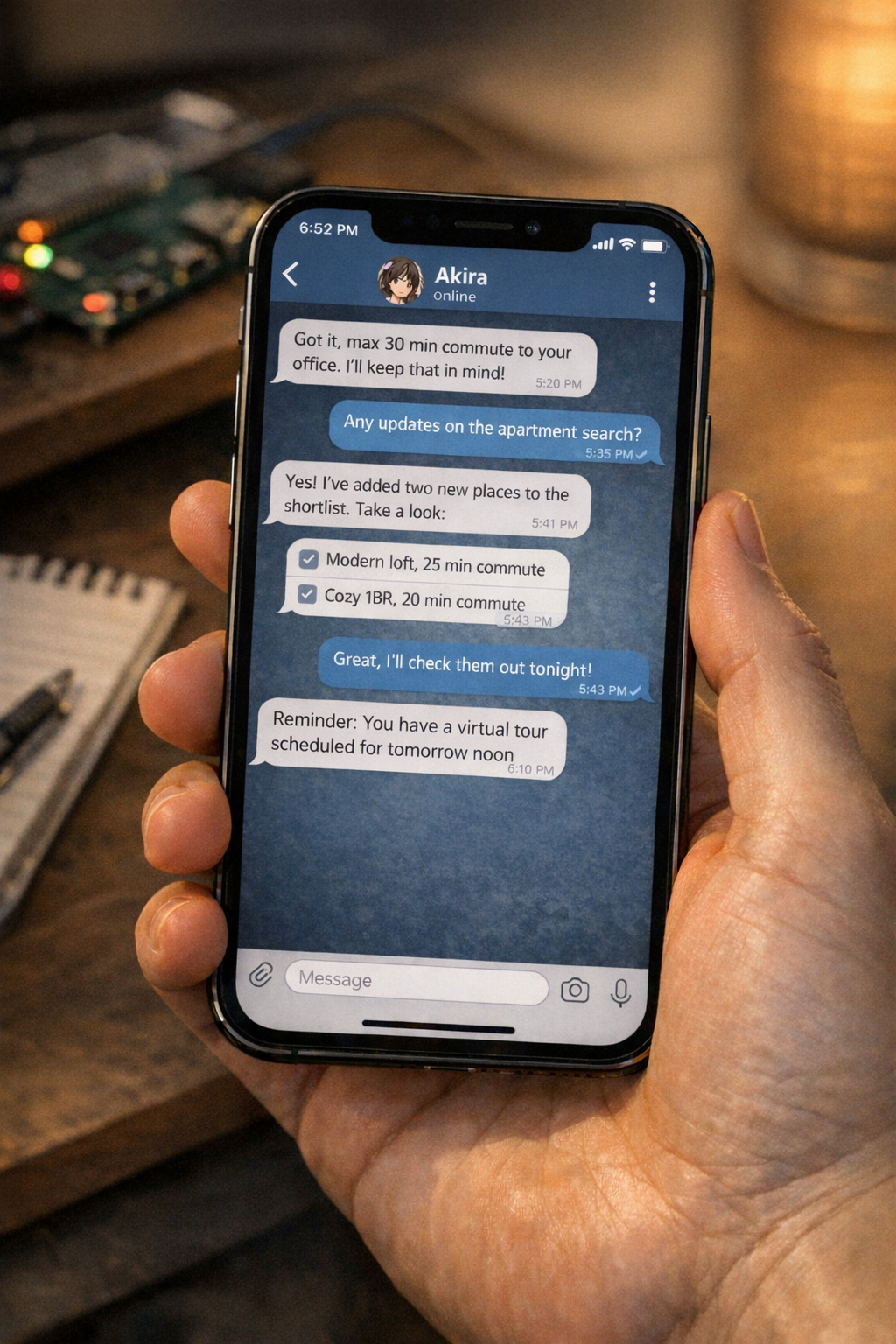
What Akira Did (So I Did Not Have To)
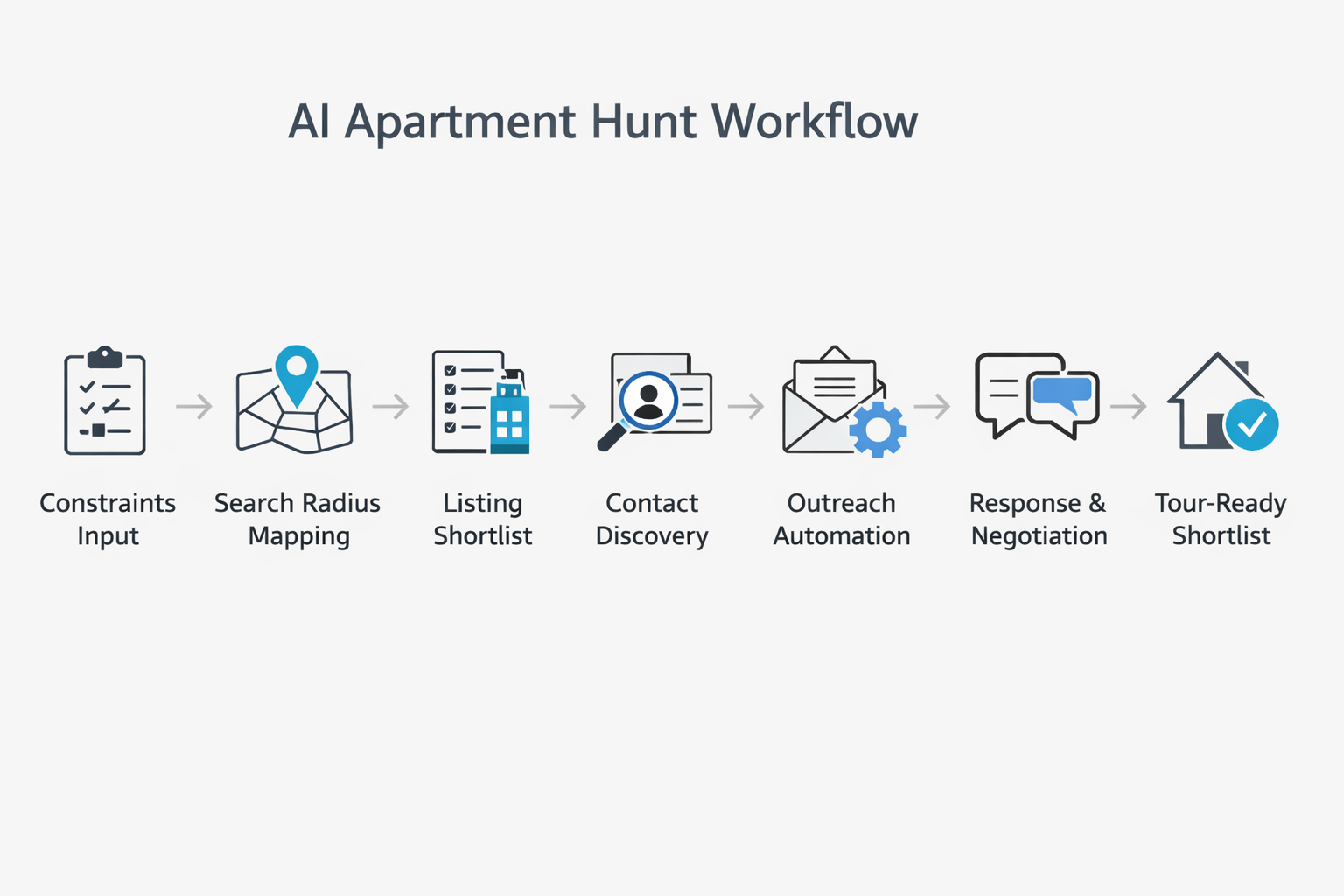
Step 1: Mapped the search radius.
She pulled the office address, calculated walking and transit radii, and filtered everything to properties within those bounds. Anything outside got dropped automatically.
Step 2: Built a shortlist of 10+ properties.
She built a shortlist of 12 options, all within commute. The standout pattern was clear: several places were within a 5 to 10 minute walk and still in budget.
Step 3: Found contact details for every one.
Leasing email, contact name, phone, website; cross-referenced across Zillow, Redfin, apartments.com, property sites, and Yelp.
Step 4: Drafted outreach.
One clean template. No unnecessary filler. I approved it in 5 seconds.
Step 5: Sent emails automatically.
All CC'd to my inbox. Timestamped and logged. For two properties with bot-protected contact forms, she spun up a headless browser on the Pi, filled the forms, and submitted them.
Step 6: Built a live Notion dashboard.
Every property in a database. Status, contact, commute estimate, last action date, next action. Color-coded by stage. Updated automatically after every email.
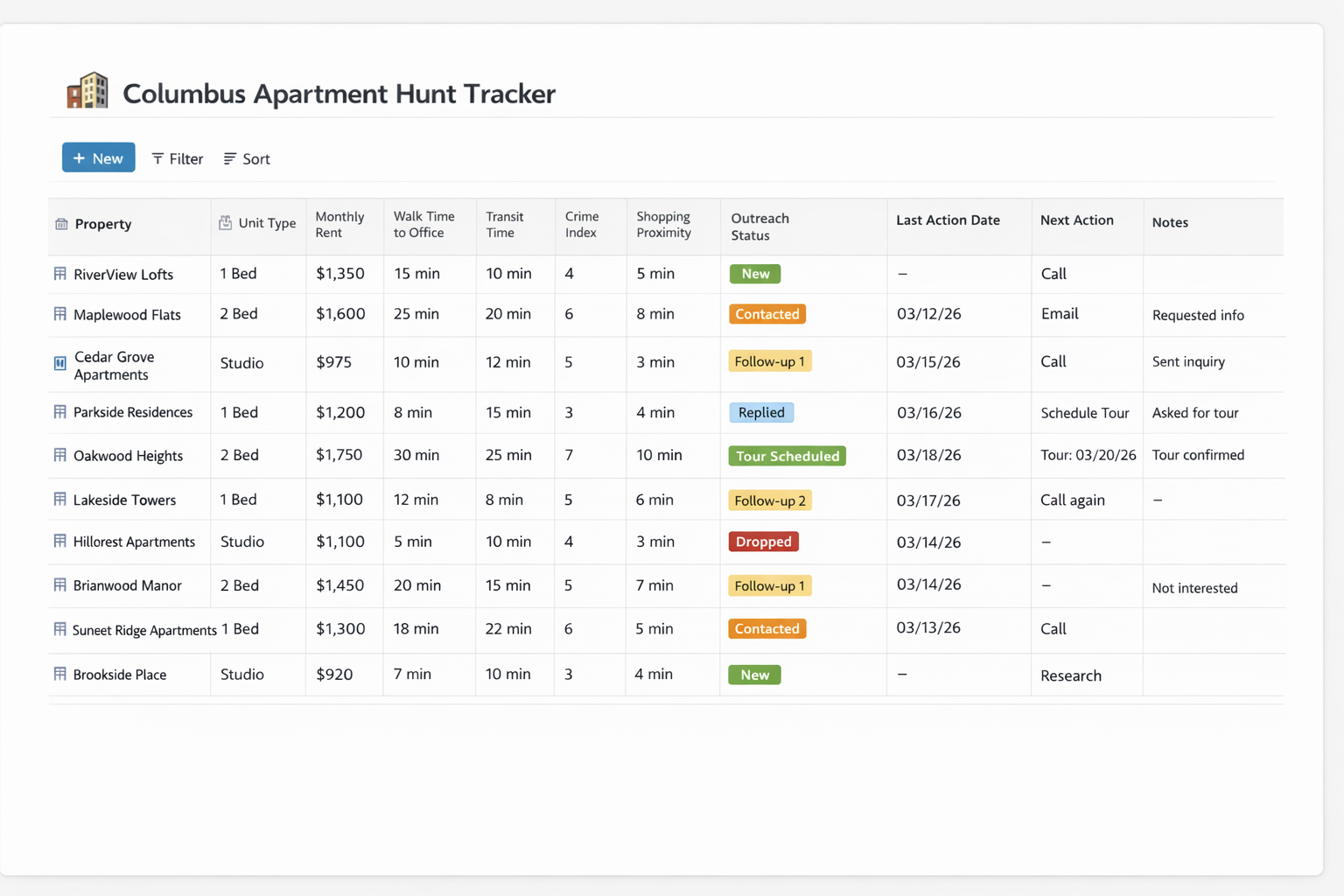
Step 7: Managed follow-ups and negotiation.
Follow-up 1 at 48 hours. Follow-up 2 at 96 hours. Akira tracked replies, flagged stale threads, drafted response variants by scenario, negotiated for better pricing when possible, and kept each conversation thread organized with key details for next steps.
The Part That Surprised Me
It was not the automation. I expected that. It was the judgment calls.
When one property turned out to be individually owned condos with no central leasing office, she found the property management company, found a residential contact, and sent a redirect email asking them to connect us to the right person.
When one email bounced, she logged it, noted the management company, and queued a contact form attempt.
None of that was in my original instruction. She figured it out.
What I Am Actually Building
I am not just apartment hunting. I am building a personal operations layer.
Akira runs on a Raspberry Pi 5 at home. She has access to my Gmail, my Notion, a browser for web tasks, and a direct line to me via Telegram. She remembers context across sessions through memory files she writes herself.
This is not a chatbot I query. It is closer to a chief of staff who handles the logistics layer of my life so I can focus on the decisions that actually require me.
I have used the same setup for morning email briefings, job offer research, system monitoring on the Pi, and research reports delivered to my inbox. The pattern is always the same: describe what you want once, she handles the steps, comes back with results or asks a targeted question when she genuinely needs input.